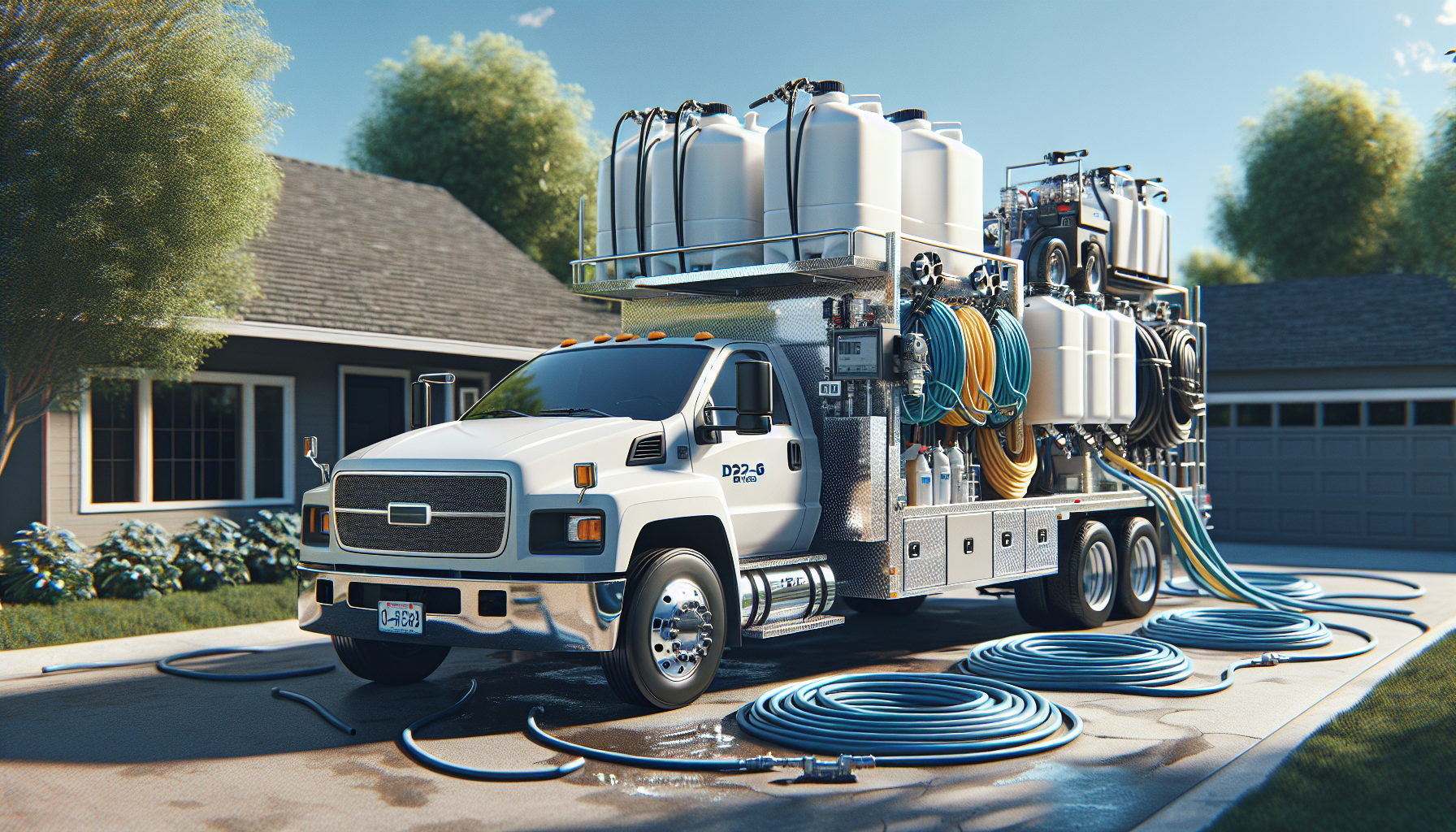
Your chemical ratios determine whether a job gets done right, comes back with a callback, or damages the surface. This guide covers the full spectrum — SH percentages by surface type, surfactant dosing, downstream injection factors, and how to track chemical cost so it actually shows up in your estimates.
Most guides stop at the mix chart. This one keeps going into the part most operators miss: chemical cost tracking. If you're not factoring chemicals into every quote, you're pricing jobs blind.
The Foundation: Sodium Hypochlorite (SH)
SH is the active ingredient in virtually every soft wash application. It eliminates organic growth — algae, mold, mildew, lichen — at the biological level. Pressure alone moves dirt. SH kills what's causing it.
Commercial SH typically comes at 10–12.5% concentration. Your job is diluting to the correct application percentage for each surface. Too weak and you're wasting time. Too strong and you risk bleaching, oxidizing, or damaging the substrate.
SH Dilution Chart by Surface Type
| Surface | Applied SH % | From 12% Stock | Key Notes |
|---|---|---|---|
| House Wash (vinyl, fiber cement) | 1.0–1.5% | 8–13 oz/gal | Soft wash only — no pressure needed |
| Roof (asphalt shingles) | 3.0–4.0% | 28–36 oz/gal | 15–20 min dwell; pre-wet landscaping |
| Concrete / Flatwork | 2.0–3.0% | 18–28 oz/gal | Pre-treat, then pressure wash |
| Wood (decks, fences) | 0.5–1.0% | 4–8 oz/gal | Never exceed 1% — bleaches fibers |
| Stucco / Painted Surfaces | 0.75–1.25% | 6–11 oz/gal | Test patch first on older paint |
| Brick / Masonry | 1.5–2.0% | 13–18 oz/gal | Rinse thoroughly; protect mortar joints |
| Pavers | 1.0–2.0% | 8–18 oz/gal | Check sealant compatibility first |
Pour SH into water already in the tank, not the other way around. Reduces chlorine gas venting and protects pump seals. Basic safety that still catches people.
The Dilution Formula
Memorize this: (Target % ÷ Stock %) × Tank Volume = SH gallons needed
Running a 100-gallon tank with 12% stock, targeting 1.5% for a house wash: (1.5 ÷ 12) × 100 = 12.5 gallons SH. The rest is water plus surfactant.
For smaller batch mixes, same formula — just change the volume. Targeting 1% in a 5-gallon bucket from 12% stock: (1 ÷ 12) × 5 = 0.42 gallons (about 53 oz) of SH.
Surfactant: The Ingredient Everyone Underdoses
SH doesn't stick to vertical surfaces without help. Surfactant creates surface tension that keeps your mix on the substrate long enough to work. Without it, your roof mix runs off before dwell time completes.
| Application | Surfactant Dose | Purpose |
|---|---|---|
| House Wash | 1–2 oz per gallon | Cling + penetration through biofilm |
| Roof Wash | 2–4 oz per gallon | Critical — prevents immediate runoff |
| Concrete Pre-treat | 0.5–1 oz per gallon | Helps SH penetrate porous surface |
| Wood Soft Wash | 0.5–1 oz per gallon | Light — don't over-lather wood grain |
Common surfactants: Elemonator (all-purpose, citrus scent), Simple Cherry, EBC (orange cleaner), or house wash concentrate. Each has a slightly different foaming profile — test before you use on a full batch.
Downstream Injection: The Factor Most Operators Forget
If you're using a downstream injector, your chemical gets diluted again at the injector — typically 10:1. That means 1 part chemical draws into 10 parts water flowing through the pump.
What this means in practice: if you want to apply 1% SH to a surface through a downstream injector, you need approximately 10–12% SH in your chemical tank. Your batch concentration must account for the downstream dilution factor.
Downstream injectors vary by manufacturer — most run 10:1 but some run 8:1 or 12:1. Test yours with a bucket and a stopwatch. One minute of draw tells you your actual ratio. Don't assume; measure once, know forever.
Chemical Cost Tracking: The Missing Piece
Here's the problem most operators have: they know their mix ratios, but they've never calculated the actual chemical cost per job. They guess it's "a few dollars" and move on. That guess is often off by 2–4x on large jobs.
To track chemical cost accurately you need:
- Your cost per gallon of SH — divide your delivered price by gallons in the drum/tote
- Your cost per oz of surfactant — divide jug cost by fluid ounces
- Gallons applied per job — track by surface type and square footage
- Your mix ratio for that surface — from the chart above
Multiply it out and you have your chemical cost per job. On a 2,500 sqft house wash applying 50 gallons at a 1% mix from 12% stock: you're using ~4.2 gallons of SH. At $2.50/gallon SH cost, that's ~$10.50 in chemical. Add surfactant and you're at $14–18 per job. That's a real number — not a guess.
⚗ Want to calculate your exact chemical costs per job? Try our free estimator.
SurfaceOps builds chemical cost directly into your estimate workflow — enter the surface type, square footage, and your cost per gallon, and the estimator calculates your exact chemical cost before you quote. No more guessing.
⚡ Try the Free EstimatorSpecialty Chemicals: When SH Isn't the Answer
SH handles organic growth. For other stains, you need different chemistry:
- Rust stains: Oxalic acid or F9 BARC. Apply to wet surface, let dwell 2–5 minutes, agitate if needed, rinse thoroughly.
- Oil and grease: Degreaser (Simple Green Heavy Duty, Purple Power, or commercial EBC). Pre-treat, agitate with a brush, hot water rinse is ideal.
- Efflorescence (white salt deposits on masonry): Dilute muriatic acid (5–10%), wet surface first, apply, neutralize with baking soda solution, rinse completely.
- Tannin stains (wood, bark): Oxalic acid is the standard. Won't bleach wood fibers when used correctly.
- Paint overspray: Mechanical removal or solvent-based stripper depending on substrate. Chemical approach varies significantly.
Mixing Order Matters
For every batch tank mix, follow this sequence every time:
- Fill tank halfway with water
- Add SH (into the water, not water into SH)
- Add surfactant
- Top off with remaining water
- Verify with chlorine test strip
Consistency in mixing order reduces variability. If your results are inconsistent from job to job, inconsistent mixing is usually the first place to look.
Common Chemical Mistakes
Using degraded SH. SH loses potency quickly, especially in heat. If it's been sitting in a drum over summer or over 60 days since delivery, test it. Degraded SH means longer dwell times, more product used, and inconsistent results on roofs.
Not rinsing plant protection. At roof wash concentrations (3–4%), runoff destroys landscaping. Pre-wet all plants and grass before application. Rinse during dwell time and after. This is the most common cause of damage callbacks.
Skipping the patch test. On painted surfaces, older brick, or anything with a sealant, test a small area before committing to the full mix. Five minutes now saves an expensive callback later.
Buying cheap surfactant. The difference between a name-brand surfactant and the cheapest option you can find often shows up in performance — especially on roof jobs where dwell time is critical. Your chemical cost per job is relatively small; don't economize on the part that makes the chemistry work.
Building Your Chemical Tracking System
The simplest system that works: a notepad (or a notes app) where each job gets a line — surface type, gallons applied, chemical used. After 10 jobs, you'll have real data on your average chemical cost per square foot for each service type. That data is what turns your pricing from guesswork into math.
Better yet: use software that tracks it automatically. The SurfaceOps estimator calculates chemical cost per job as part of the estimate workflow — surface type, square footage, your costs — and the number comes out the other end. Check our platform pricing if you want the full quoting and tracking suite.
⚡ Know your chemical cost before you quote
Enter the job, surface type, and your chemical costs once. SurfaceOps calculates it on every estimate automatically. Built for pressure washers who want the right number fast.
⚡ Get the Free Estimator